
Showing posts with label Beer. Show all posts

Saturday, June 27, 2009

RedRum Beer


In the debut installment of my ultra-novice beer blogging, we looked at an India Pale Ale. This time around, we're going to look at two different varieties of red beers.

The style guideline for Irish Red Ale (thanks to my friend for linking me to it) says that it should be easy drinking with "an initial sweetness and a roasted dryness in the finish." The reddish color is achieved by roasted barley. Irish red ales are "malt-focused", and usually don't have a noticeable aroma of hops, although several recipes I've found have called for the addition of Kent Goldings hops. A brief Googling turned up this site with three distinct Irish red recipes, and indeed all of them call for roasted barely. The other components seem to vary somewhat. One of them calls for adding honey, another adds chocolate.

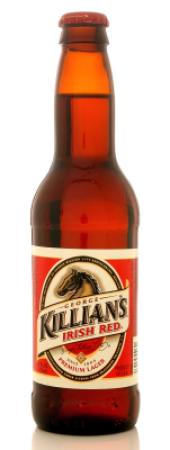
2. Killian's Irish Red

Image source (via Google Images)

Killian's Irish Red, named for George Killian Lett, who founded the brewery that crated the originally recipe in Ireland in 1864. It was originally an Irish Red Ale, but is now brewed in America by Coors and is now considered an American style amber lager. The transition was done to give it a broader appeal, and making it a lager took out some of the fullness of it, and reading around on stuff like beer-advocate.com it seems as though people who are big beer aficionados have quite a disliking for it for that reason. This is apparently not unprecedented, though, as makes a note that beers classified as such can be brewed as lagers. Personally, I've always really liked drinking Killian's. I don't doubt that there are better red ales out there which are truer to the whole tradition of the style, but I certainly think Killian's is a good beer and its readily available. I know there's several bars I've been to that have had it available on tap, and if you want to buy a 6 pack of it you can buy it pretty much anywhere.

3. Berghoff Famous Red Ale

This was on tap at an Irish pub in Downer's Grove which I decided to try on a whim. I ended up liking it enough such that I ordered it again the week after when I was there again. The name comes from the historic Berghoff restaurant in Chicago which is now closed, but there's still a line of beers being produced with the Berghoff name, now brewed in Wisconsin. According to Rate Beer's entry for it, its brewed with "Brewer's Two-Row Malt, Caramel 40 Malt, Carapils Malt and domestic hops" and its classified as an American Pale Ale. Two-Row Malt is used as a base for American style beers, Caramel malt--so named for its crystallized sugar--gives (appropriately enough) a caramel flavor and adds to the redness of the color, and carapils are used in pale ales to "balance body and flavor" without adding color. Reviewers on Rate Beer seemed to largely hate this, one review describing it as tasting "metallic." I think it does have a bit of a harshness to it, but I think metallic is a bit of a strong word. It certainly wasn't harsh enough to not make me want to drink it twice.

I've had a number of other red ales in addition to these. I think I've had enough of them to say that really like it as a style, seeing as I really like what are considered some of the "bad" entries of the style by those who study this stuff closely. Perhaps I'll post about more varieties down the road.


Sources: Wikipedia - Killian's, BJCP Style Guidelines, Real Beer.com, Rate Beer - Berghoff, and anything else I linked to above but maybe didn't put down here

Wednesday, June 17, 2009

New Feature... BEER!

I haven't blogged about the Cubs in a while. I'm going to try making a post in the near future, but I'm really not looking forward to it. Cubs baseball has been something of a trainwreck for a while now. In the meantime, let's metaphorically drown our sorrows by blogging about beer. I've thought about doing this for a while, because I like trying out new beers and I've been curious as to just how big a list it would be if I compiled all the beers I've sampled. At some point though, it occured to me that I basically don't know much of anything about beer. I know what I like, and what I don't like, but I don't really know anything about brewing, nor what exactly the different varieties of beer actually entrail, nor how beer is generally described by people who know what they're talking about. So I figure the best approach to this would be to basically try learning as I go, so that's what I'm going to do. As I find beers to write about, I'll try and scour the interwebs for what more seasoned drinkers have said about it, and find a little information about the style of beer and how its brewed. I'll add my own thoughts as best I can as we go along. But a lot of it isn't going to be my own thoughts whatsoever, so I'm going to try to remember linking to all the sources I'm getting this stuff from.

Let's start off with an India Pale Ale:

1. Lagunitas IPA

(Image source, via Google Images)

IPA, if you're not privvy to beer related acronyms, stands for India Pale Ale. Seeing as this is the first post on the subject, lets keep it simple from the outset and take this one step at a time. First things first,

What's an ale?

Ales are brewed with "top-fermenting" yeast, meaning that it rises to the top of whatever its being fermented in. Lagers, conversely, use "bottom-fermenting' yeast, which sinks to the bottom. Ales take less time to brew than lagers and tend to be sweeter. They're usually fermented in a range between 60 and 75 degrees fahrenheit.

Okay, so what the hell is a pale ale?

Getting the obvious part out of the way, pale ales are pale in color. Evidently, there's actually a scale for judging the color of a beer, with the very generic name "Standard Reference Method." Evidently, Pale Ales are usually 8 to 14 degrees SRM. They came into existence in the 18th century in England after brewers there began incorporating coke into the brewing process (presumably that's coke as in the byproduct of smelting, not cocaine). The usage of coke allowed a more controlled burn during the "kilning" process--drying wet grain by way of an oven--which allowed for the brewing of a paler colored beer. The darker colors of beers that were traditionally brewed at the time came as a result of the grain literally being scorced in the oven where it was kilning. Before this, it wasn't possible to brew beer with this sort of a color. About.com desribes the traditional British Pale Ale as having "a malty profile and just enough woody or lightly floral hops for balancing" Over time, other styles of pale ale have been producted elsewhere, in places such as the US, France, and Germany.

So lets put it all together now... what the hell is an India Pale Ale

India Pale Ale's are named such because they were often exported to India from London in the early days of Pale Ale brewing in London. As innovations made it possible for the beer to survive the trip there--such as the use of hops, which are natural preservatives--a large market opened up for them and the denizens of British-controlled India developed quite a taste for them. IPAs usually have a high alcohol content, from 5.5% to 7% in most modern versions, while sometimes over 8% in the old batches brewed in the 1700s. IPAs generally make use of carapil and crystal malts (see here for a description of these) and are described by the North American Brewer's Association's website as "possess[ing] a nose of perfumey alcohol, fruitiness, and malt, although newer versions frequently overshadow the malt with strong hops." The types of hops used vary from British and American styles. The American style calls for hops which project a citrus flavor, which I think I detected drinking the Lagunitas, although really what do I really know at this juncture. I've been drinking beer for a long time, but this is the first time I've thought about it nearly this much.

Getting that out of the way, lets see what people who presumably know way more than I do are saying about the Lagunitas IPA. Its sitting on a B+ overall rating on Beer Advocate and an 87 on Rate Beer. Reading individual reviews, they seem to be kind of all over the place, but if there's any consensus it seems to be that the beer has a pleasant earthy, "grassy", aroma to it, and that its very drinkable, alhtough perhaps not as flavorful as it could be. I suppose I can be confident enough in my beer-tasting palette to at least agree with the basic premise this. I'm not really one who likes to try and project some sort of aura of rugged masculinity by embibing in the strongest, heaviest beers possible. To use another term that I just learned, I'm prone to "sessinonable" beers, that are more about taste than hitting you heavy with a ton of alchohol. Lagunitas is 5.7% alchohol by volume, which is at the lower end of the range for IPAs, but IPAs are still high compared to most other pale ales. With Lagunitas, I didn't get much of a harshness from it. It was definitely a very drinkable, "sessionable' beer. I liked the taste of it, I don't know if I loved it. Its something that I would drink again and certainly wouldn't refuse if it was offered to me, but perhaps wouldn't go far out of my way to get my hands on it. I don't think I've tried enough IPAs yet to really determine if that's because I'mw just not hugely crazy about IPAs as a style, or because I didn't like Lagunita's particular take on it. Perhaps that will change in the future. We'll see.

For the next addition of this, I think I'm going to write about a beer that I've been drinking for some time now, and is probably more well known than Lagunitas: Killians Irish Red.

Sources:

Wikipedia (articles: Ale, Pale Ale, India Pale Ale, Standard Reference Method)
beer.about.com
North American Brewer's Association